“What is the first step to becoming a Felician Sister and how has it evolved over the years?”
This is the evolution of the first step of formation, the Aspirancy.
Definition
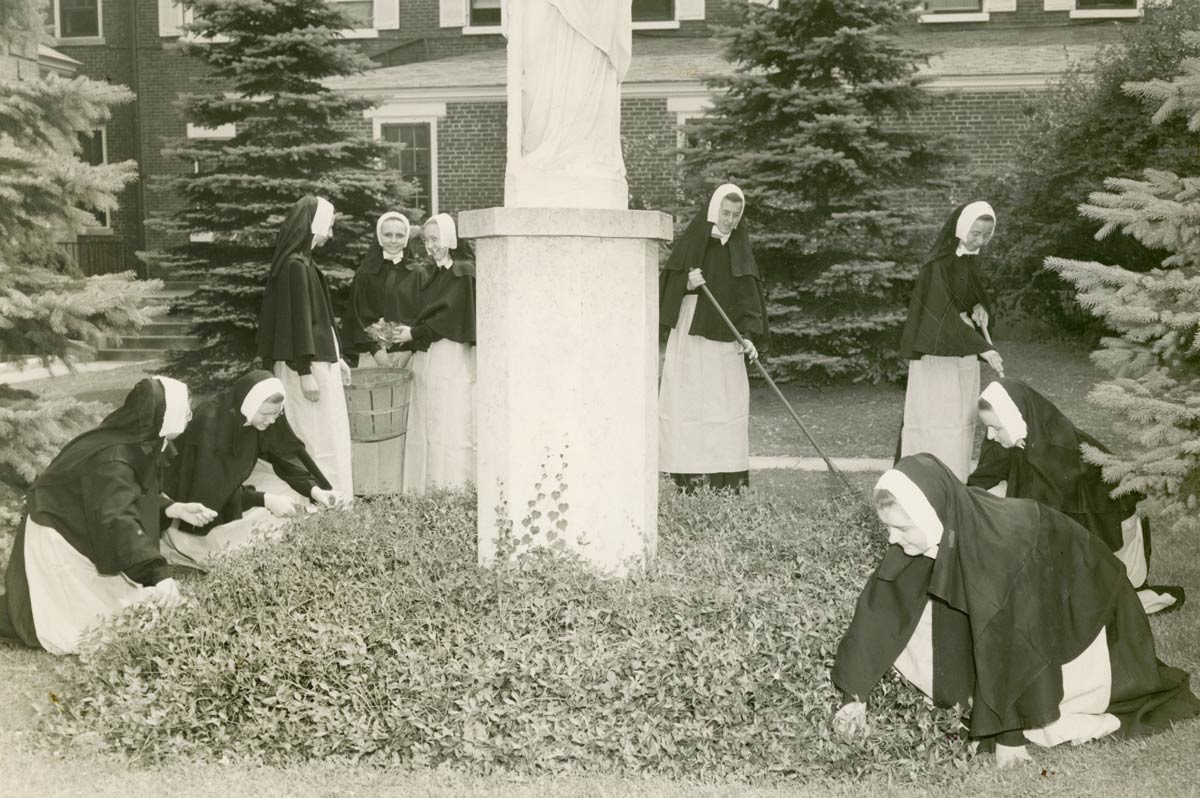
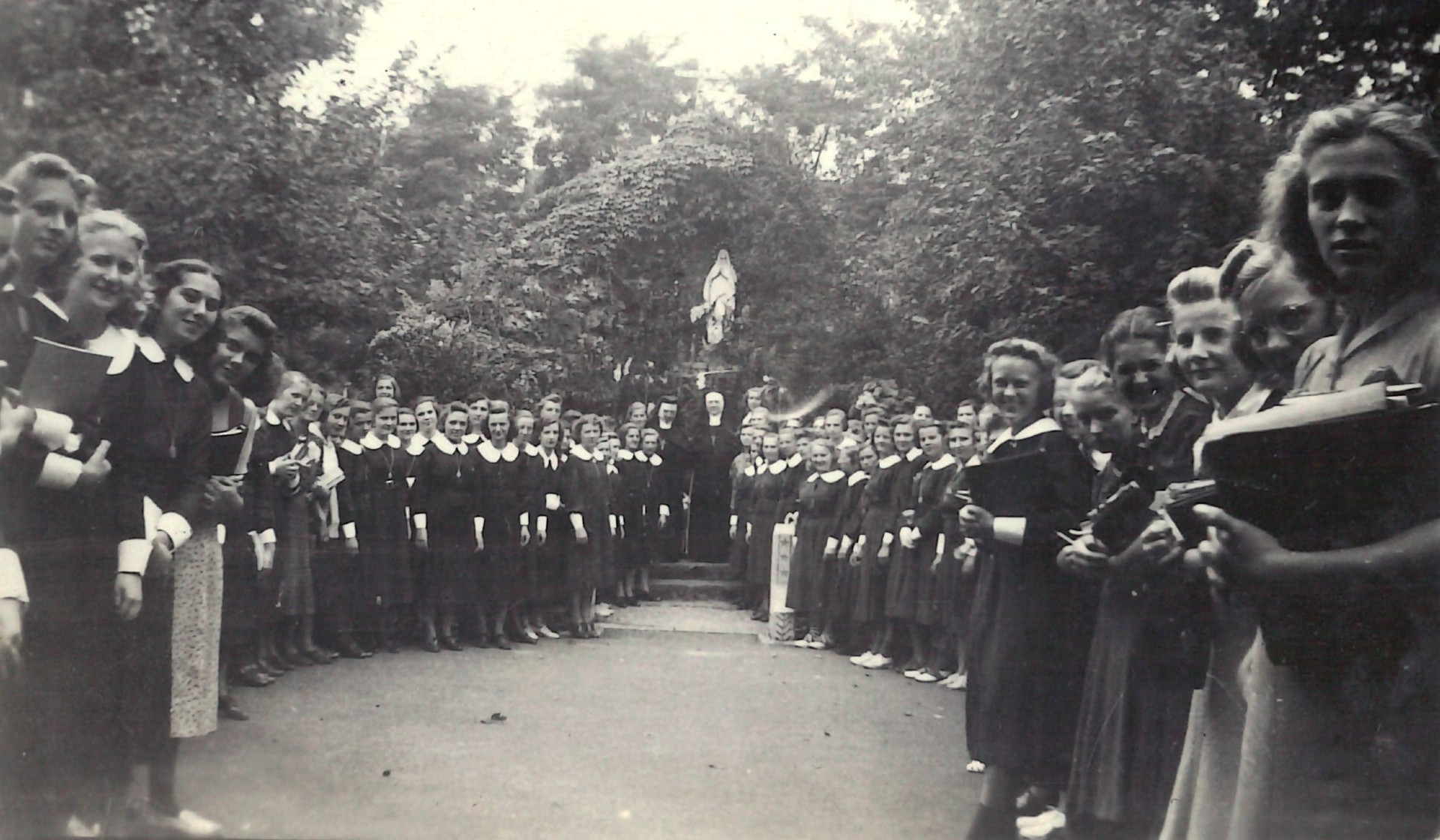
Aspirants were young girls, aspiring to become sisters. They were generally fourteen to eighteen years of age, who lived together in community and in close proximity to the sisters. They attended a Felician Sisters’ seminary or high school while nurturing their spiritual growth. After they finished their foundational education, they entered the postulancy, the next step in becoming a sister. Aspirants were often referred to as “preps”, or, in the instance of Father Joseph Dabrowski, “half-sisters”. They were also sometimes referred to as Juvenists, and the program referred to as the Juniorate, by a few of the Felician Sisters' provinces like the Immaculate Conception Province of Lodi, NJ.
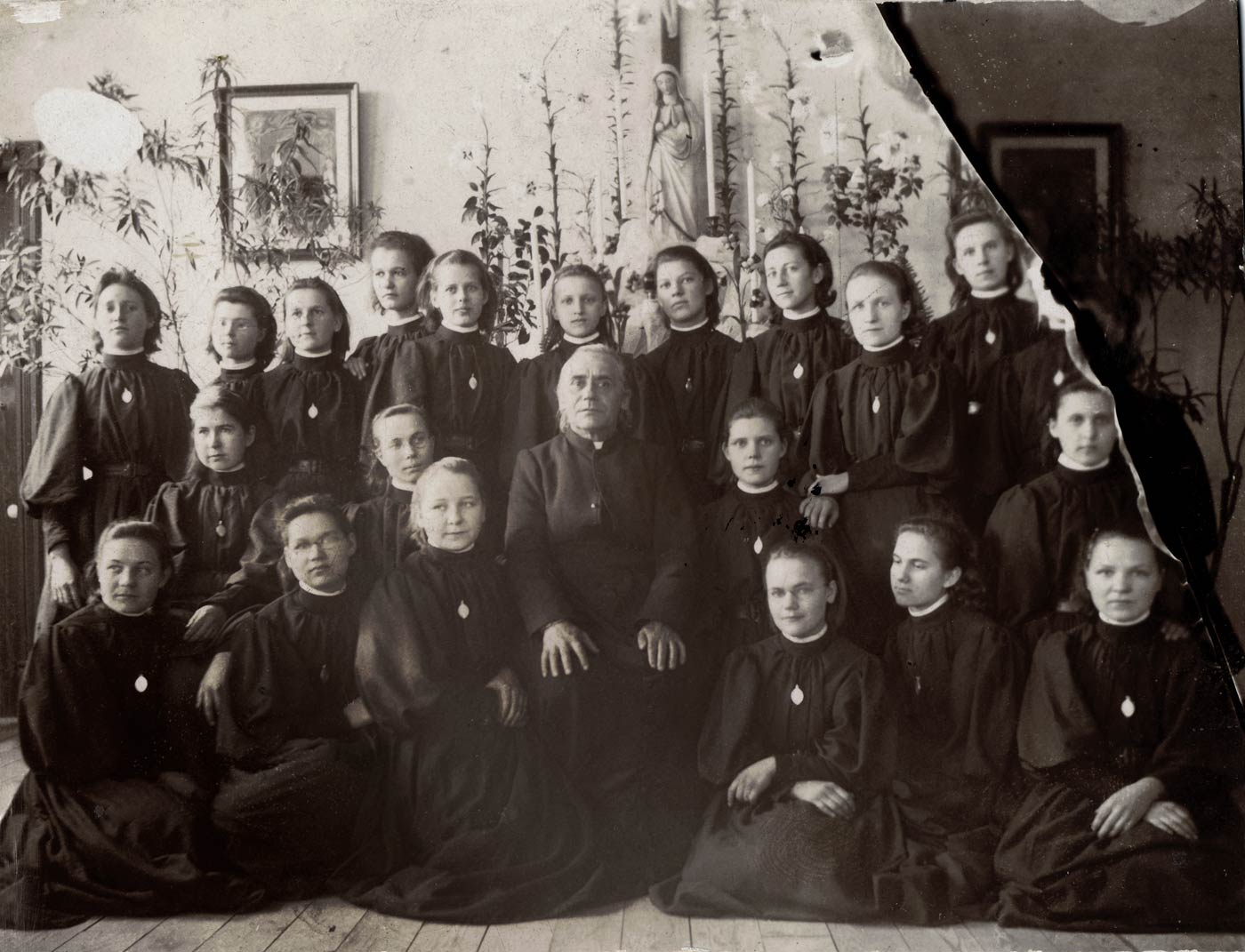 Father Joseph Dabrowski (center) and Felician aspirants from the Presentation of the Blessed Virgin Mary Province in Detroit, Michigan (1899).
American Born
In fall of 1874, when the five pioneer sisters arrived in Polonia, WI, from Poland, the aspirancy did not exist. The convents back in Poland did not have this pre-postulant step.
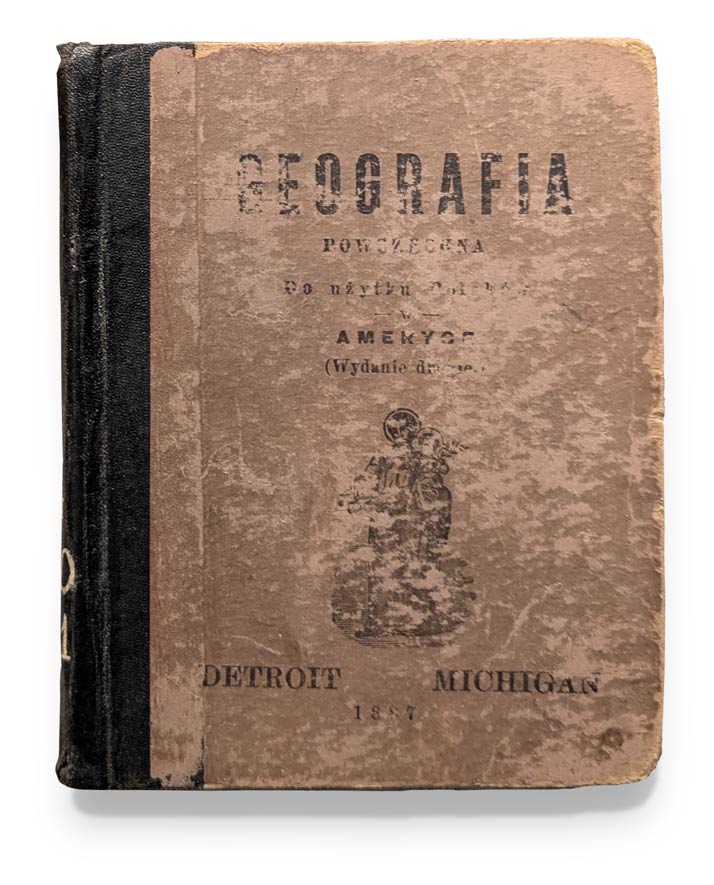
Geografia (1887) is a geography book that was written, published, printed, and bound by Fr. Joseph Dabrowski in Detroit, Michigan.
For the Felician Sisters, their first aspirant was Antonina Zarach, Sister Mary Joseph. The sisters in North America had to organize the aspirancy for her since they’d never had eleven or twelve-year-olds ask to join their order before. By December, the Felician Sisters had eleven aspirants. Their first aspirants averaged nineteen to twenty years old, but, as noted with Sister Mary Joseph, some of these girls were as young as eleven.
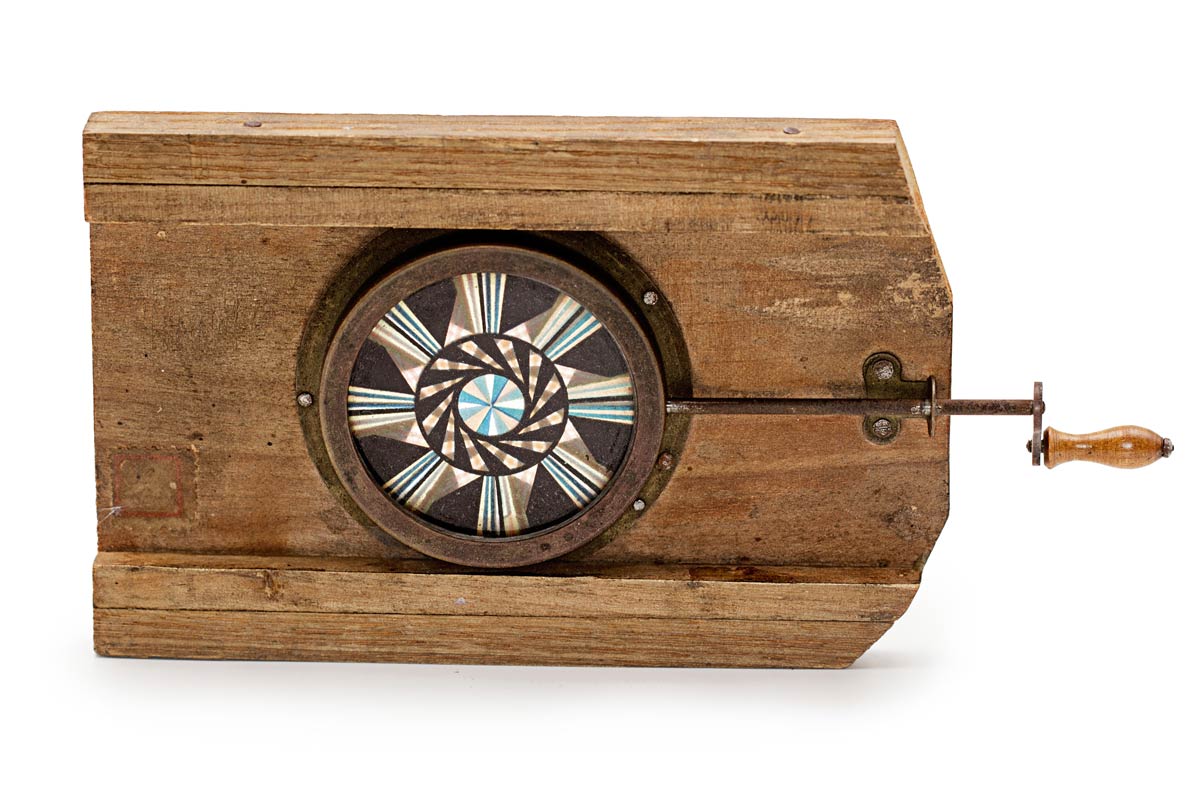
Fr. Joseph Dabrowski created this kaleidoscope (1880s) with bits of colored glass and mirrors. Symmetrical patterns appear as the instrument is rotated. It was used to teach physics at the Seminary of the Felician Sisters in Detroit, Michigan.
Since this was a new step created for those wanting to enter the Felician Sisterhood, the five pioneer sisters needed assistance with figuring out what the requirements and overall curriculum should be. This is where their good friend Father Dabrowski came into play. He taught not only some of the older sisters subjects like astronomy, but he also helped them write textbooks for all the school aged children they would go on to teach, including their young aspirants. He even created teaching implements and visual aids himself since they were low on funds.
Father Dabrowski also assisted with the hiring of lay teachers for the first aspirants, making sure they were well qualified. He even took on teaching the aspirants himself by taking them on field trips and teaching them how to do things like redo electrical wiring and fix the plumbing so they could be self-sufficient in their convents.
So Many Aspirants!
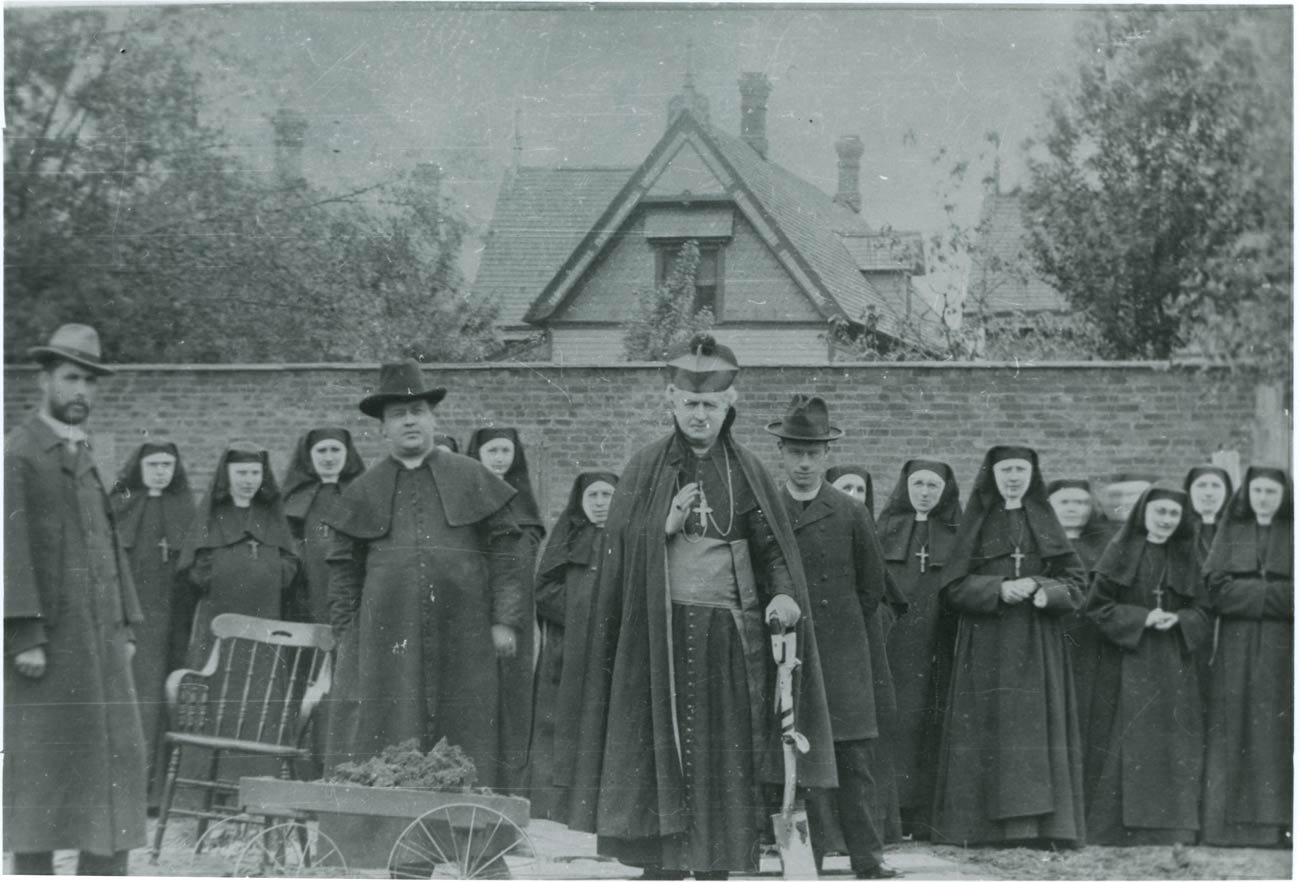
Father Joseph Dabrowski took this photograph of the groundbreaking for the Felician Seminary (later called the Felician Academy) in Detroit, Michigan in 1899. Father Dabrowski is holding the shovel in the photo. He is also credited with taking the photo.
Things were moving along nicely in the first American province. Compared to Poland, the sisters in North America had far more girls joining their ranks. So much so that they had to build the Felician Seminary (later called the Felician Academy) for the aspirants in Detroit, MI, starting in 1899. From 1875 to 1900, 370 candidates entered the order from thirty-seven cities from ten states, with another province having to be added in Buffalo, New York in 1900. Only fifteen candidates came from Poland, the rest were from North America.
In a letter to the sisters’ foundress, Blessed Mary Angela Truszkowska, written sometime between 1887 to 1890 from Polish sister Sister Mary Augustine Bielawska during her stay in the Detroit Province, Sister Mary Augustine wrote:
The American girls gave their parents no peace after receiving their First Communion; they wanted to join the order of the Felician Sisters so badly. “Since First Holy Communion is usually scheduled at the end of the school year, there is a candidate from nearly every mission home, sometimes two or three, arriving with the sisters for summer vacation, like a hen with her chick. And so, these little chicks, who are twelve or thirteen years old at the most, are accepted into our school for aspirants.”
Reports such as these impressed the Polish sisters so much, demonstrating the effectiveness of their North American sisters at getting vocations, that the sisters in Cracow, Poland, requested three sisters from Buffalo, NY, to come to Europe and assist them with their own recruitment efforts.
North America vs. Poland
Why the disparity in numbers, though?
For the sisters in Poland, their candidates largely came from urban, middle class and noble families. Sisters, like Blessed Mary Angela, often came from fairly wealthy families with connections to similarly prestigious families. This was true for many religious orders all over Europe. These women had means and often better opportunities than those considered of lower class and they received a good education.
Most of the North American province’s recruits were Polish immigrants and daughters to peasant families, not used to urban or upper-class culture or education. They usually didn’t receive education beyond twelve to fourteen years of age because they were expected to work. As such, they were accustomed to making big life decisions early like choosing to join religious life. For young women in their twenties who joined the order later in life, they were often older immigrants, previously employed or former members of other religious organizations.
Parental Disapproval
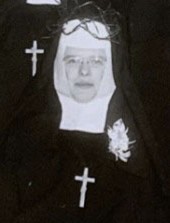
Sister Mary Amadeus at one of her jubilees, c. 1950s.
Parents often did not agree with their daughters joining religious orders, though. This included their aspirancy program through their high schools/secondary schools which more formally developed from 1910 to 1940 from seminary schools. While it was sometimes expected for some large families to have one son and/or one daughter enter a religious order, with sometimes blood sisters and cousins entering the Felician Order together, many families were against these orders accepting their children. This push back from parents is likely part of why contact between aspirants and their families was greatly curtailed, being confined to only short vacations at Christmas and in the summer.
For young girls like Winifred Ruda, born in Webster, Massachusetts, who later became Sister Mary Amadeus, such opposition by her parents only strengthened her resolve to join the order. Her parents did not want her to leave home so young and made her go to public high school for a year instead of going to the Felician Sisters’ Immaculate Conception High School in Lodi, NJ. Unfortunately for them, she found public school "distasteful" and ended up entering the aspirancy in the summer of 1925, at age fourteen, despite their opposition.
This trend of parental disapproval of their daughters joining religious orders still continues today.
Overcrowding
As more and more aspirants joined the order in the early years of the North American provinces, the Felician Sisters found their motherhouses having to rapidly expand to meet demand. The buildings were constantly overcrowded with their aspirants, the orphans, and the older sisters often all under one roof.
When the sisters moved from Polonia to Detroit, they found, in the summer of 1883, that they had to convert their new convent hallways into sleeping areas for all the aspirants and the orphans they were housing. It got so bad that, by spring of the next year, they had to add a new wing of the motherhouse as quarters for the children.
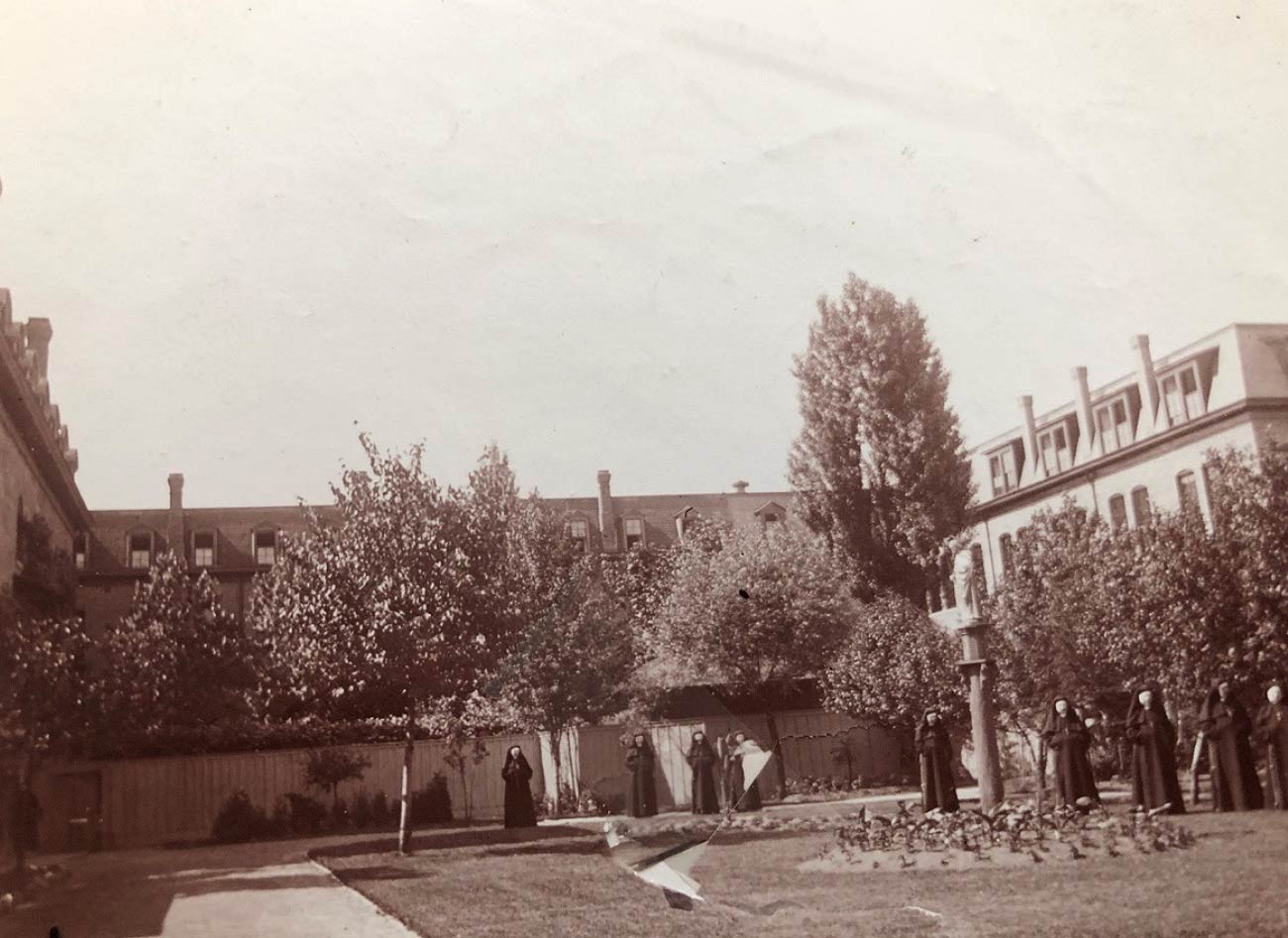 A view from the garden at the motherhouse in Detroit, Michigan. The building on the far right is the last addition to the Felician Academy, the Seminary of Felician Sisters.
To further address this issue, as the years wore on and their numbers kept increasing, the Detroit province tried to turn an old mansion they bought in Jackson, MI, into an academy for the aspirants in 1911. It lasted only one year as they found it lacked room for daily Mass, it was too far to walk most days to the distant parish, and their lodgings were seen as not quite humble enough, for growing, future religious sisters. So, the aspirancy moved back to Detroit, and the Jackson mansion became a home for boys instead.
Still, the province had overcrowding. This caused the sisters to send their aspirants to stay in the parishes they ministered at during the summer months where the young women slept on cots in the attached school buildings.
When the sisters moved their motherhouse from Detroit to Livonia in the 1930s, it finally gave them more room. The aspirancy continued in Detroit as Felician Academy, while the older sisters moved into Livonia. Many of the aspirants from some of the other provinces, like Coraopolis, PA, sent their aspirants to the Detroit academy in the 1920s to the early 1930s while the older sisters of the newer provinces focused on further establishing and building their provinces’ ministries and convents. The Buffalo province also offered schooling for aspirants from other provinces from 1929 to 1934 for the same reason.
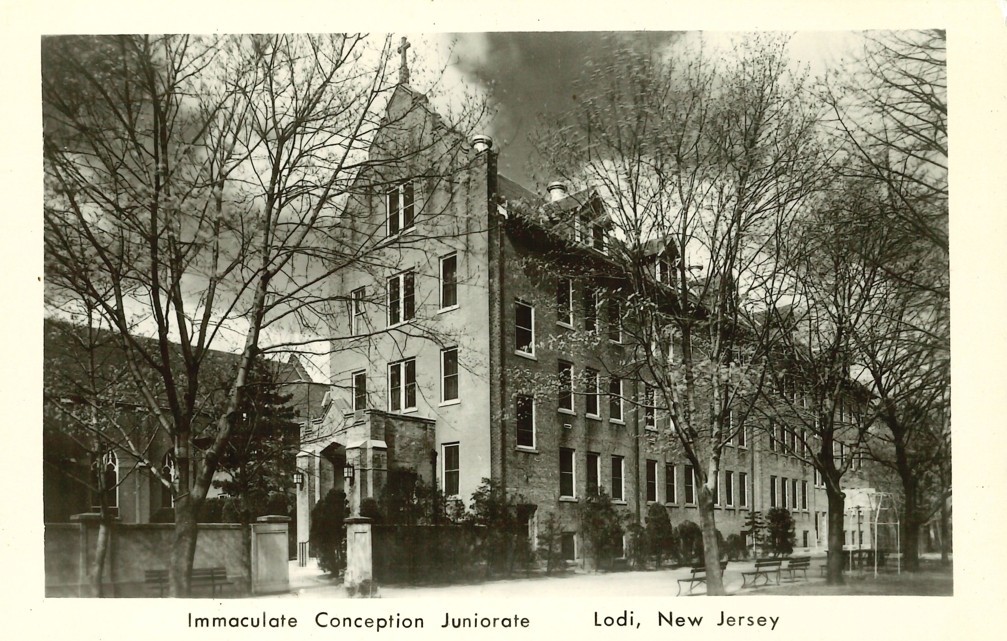
Postcard depicting the wing of the sister's motherhouse in Lodi, NJ, that housed the aspirants (c. 1934).
The Lodi, NJ, province, established in 1913, had similar overcrowding with their aspirants. Just after the establishment of their new province, they decided to build a new wing to their motherhouse to help accommodate their own influx of aspirants. During its construction in 1915, the aspirants lodged in what the sisters refer to as the Red House, which had functioned as the sisters’ first general lodgings within the province before their official provincial house was built.
When an influx of twenty more aspirants came from Buffalo, the girls stayed in the unfurnished east wing they were building. This was a small issue, because there were no stairs yet between floors. Fashioned from strong rope, they had ladders that the girls used to get to their austere lodgings. In 1916, thankfully, the east wing was completed as the official lodgings for the aspirants and their schooling.
Not Enough Sisters!
Unfortunately, some problems were not so easily fixed by simply building more accommodations. In many ways, the sisters bemoaned the lack of more sisters who needed accommodating.
When the Felician Sisters arrived in Polonia in 1874, they were the first and only women’s religious order in North America from Poland for eleven years. Before the Felicians, early Polish American schools were taught by non-Polish sisters like the Sisters of Norte Dame (1873) and the Sisters of Divine Providence (1872). That means that all the Polish immigrants in North America had no religious order that catered specifically to them–no one who spoke Polish and understood their want to keep their culture and faith alive by continuing to speak their language. To make matters worse, there was also a distinct lack of Polish priests.
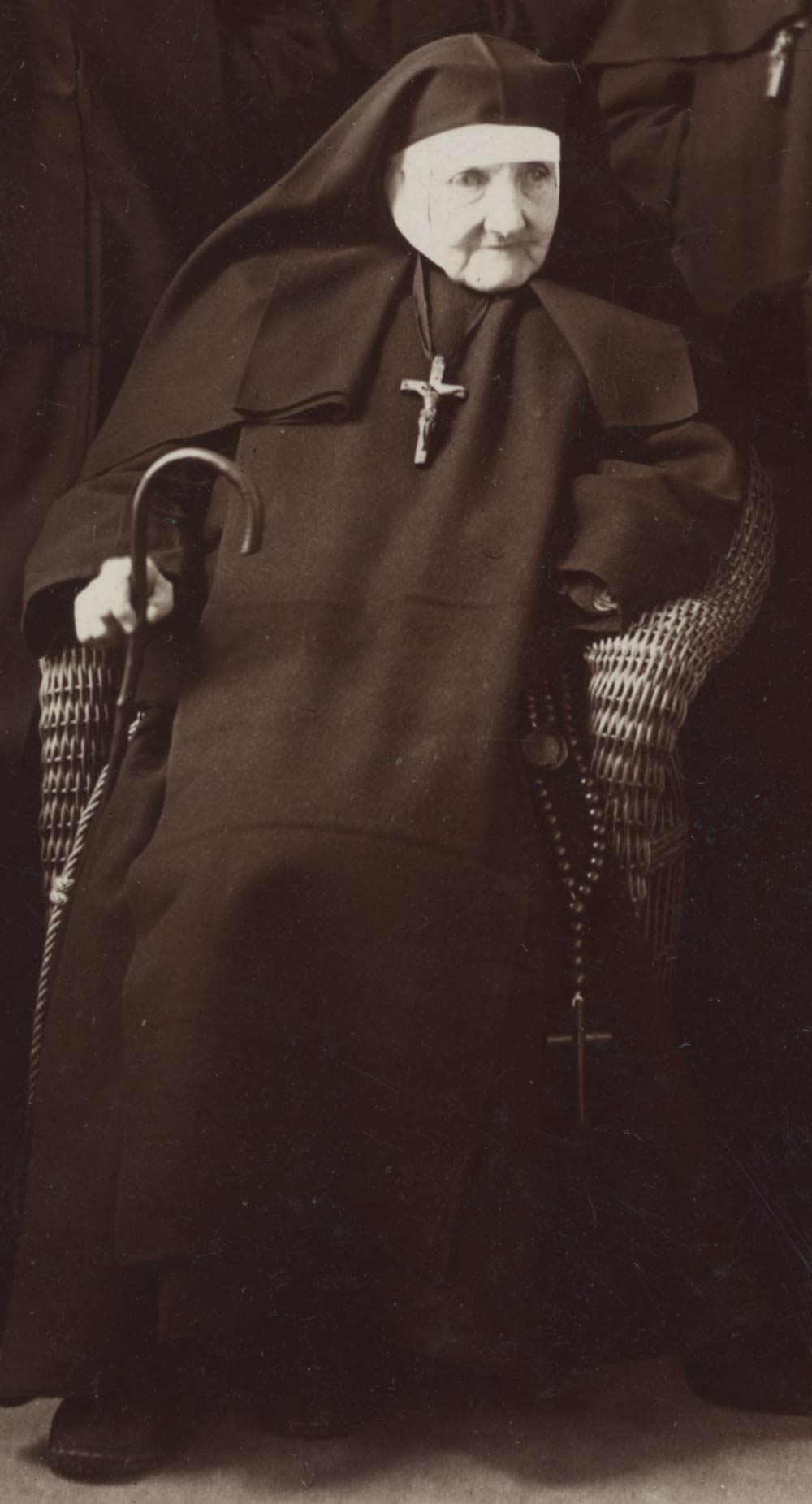
Mother Mary Monica Sybilska, c. 1880s
As a result, the sisters were in high demand. During the turn of the century in North America, Mother Mary Monica Sybilska, the leader of the pioneer sisters, had to choose whether to continue accepting new ministries–to help the Polish people in America, which was the sisters’ mission–or not.
Pastors kept asking Mother Monica to send sisters to their parishes and schools. They insisted even when she said no. In one pastor’s words, "Mother, you have no idea how effective the habit is at managing school children and in correcting their bad behavior." These constant and never-ending pleas put Mother Monica in a bind, contemplating the Polish communities’ needs over those of her own religious community, as the sisters were already having a staffing problem. They did not have enough experienced sisters teaching and training their aspirants and younger sisters.
This compounded the sisters' problem of already being so low on staff for the ministries they took on. The immigrant populations they served were so numerous, that the sisters started to have postulants and novices, the two next steps in becoming a sister, to take up teaching positions away from the provincial house. And, when things got truly dire, Mother Monica would give a postulant bonnet to the tallest aspirant and then send her to teach.
Sister Mary Cajetan Jankiewicz, a fellow pioneer sister to Mother Mary Monica, complained in a letter to Blessed Honorat Kozminski, Blessed Mary Angela’s spiritual advisor who oversaw the order during part of its early years, “I'm begging you to see that we don’t accept any additional new homes. We are already staffing nineteen, some of these with the wrong personnel.”
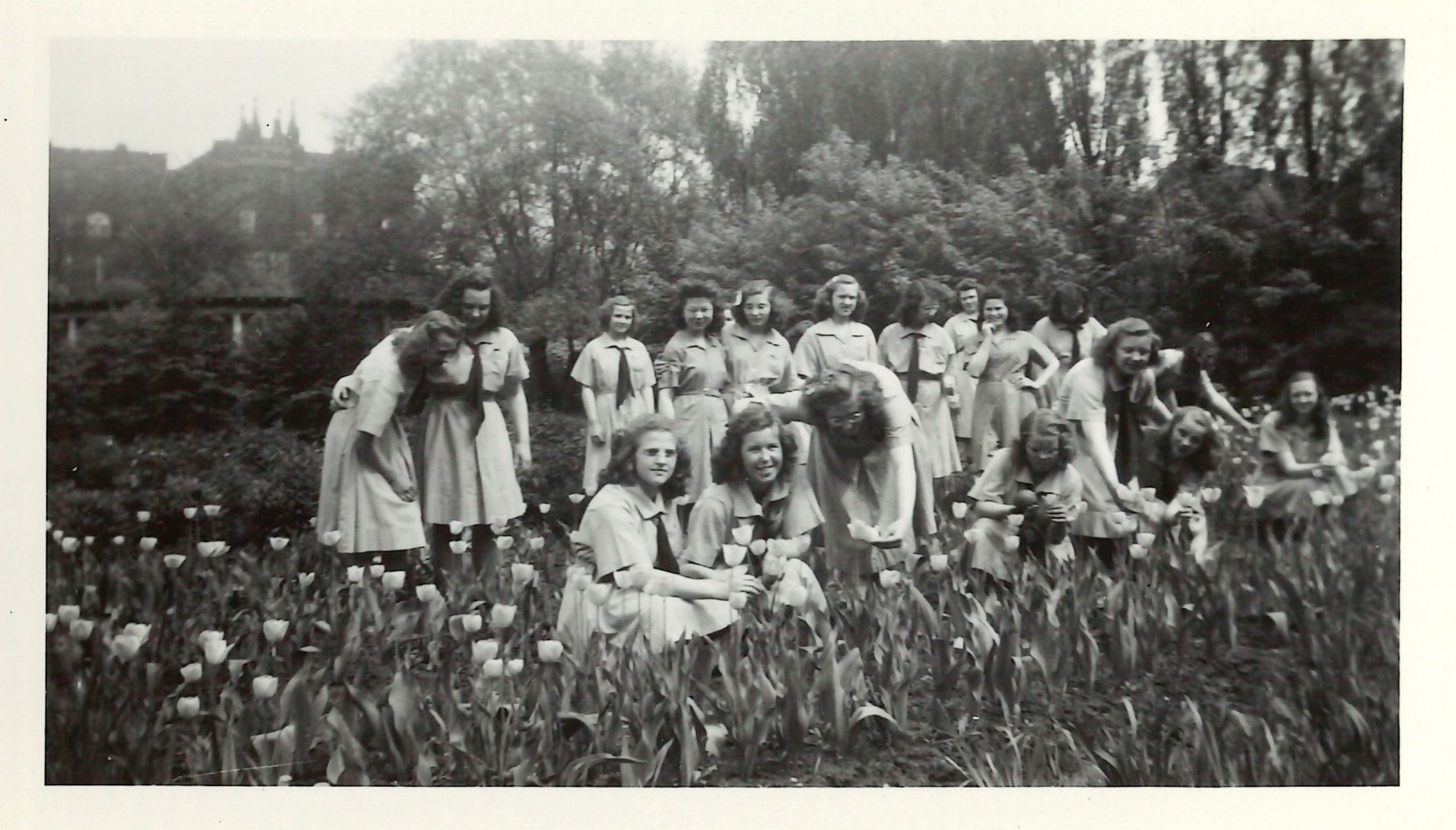
Aspirants from Villa Maria Academy in Buffalo, New York, Class of 1931 (c. 1930).
Community members commented that children were teaching children, as the sisters sent were so very young and inexperienced. A few, in the case of the Buffalo province, questioned the education quality, and not just for the immigrant children, but for the young aspirants and sisters as well. The interruptions to the girls' spiritual growth and own schooling were being noticed. In the Buffalo province, which ended up experiencing the same issues as the Livonia one, these conditions caused aspirants a delayed entrance into postulancy by about one year. At least the Livonia province’s teaching issue seemed to subside by 1904. It was the newer provinces that the sisters had to worry about. Some were still experiencing issues into the 1930s and even the 1940s, such as the newly founded Enfield, CT, province in the 1930s. There, not all young sisters were able to complete their studies before they were sent to teach. They also had compounding issues from the Great Depression which contributed to their lack of space for a proper aspirancy in their own province until 1944. Until then, they had to send their aspirants for schooling in Lodi, NJ, at their Immaculate Conception High School.
Slow Down
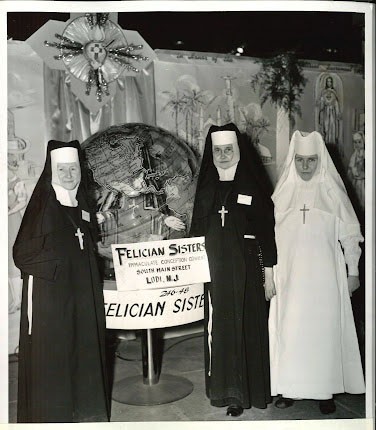
Vocation exhibit with Sister Mary Virginette, Sister Mary Justitia, and Sister Mary Joanne at St. Joseph School from the former Lodi, NJ, Province (c. 1940s-60s).
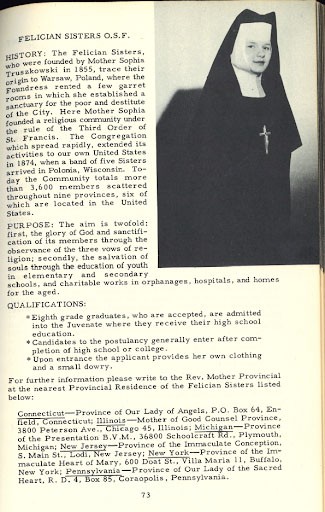
Page on the Felician Sisters O.S.F. from Thomas P. McCarthy's Guide to Catholic Sisterhoods in the United States (1952).
From World War I onwards, more schools and ministries were undertaken and the sisters continued to grow. However, as the 1940s came around, vocations began to slow, resulting in many of the sisters' high schools that were for aspirants to open up to girls not aspiring to become sisters. Also during this time, sisters started to step up efforts to recruit aspirants. The sisters photographed religious ceremonies and displayed them in vocation exhibits in a bid to gather interest. This culminated in collaborations by sisters like Mother Mary Gonzaga Zamojska from the Coraopolis province providing descriptive essays and photos to people, like Rev. Thomas P. McCarthy for his Guide to Catholic Sisterhoods in the United States, so potential aspirants could use those pictures and writings to explore what it means to be a Felician.
By the end of World War II, six provinces were founded. Moving into the 1950s, the next big change to the aspirancy came with an unexpected post war boom. During this decade, the median age for matrimony among young women dropped from twenty-two to twenty and then into the teens. Girls were getting married younger, but they also seemed to be flocking to religious orders in greater numbers, too.
In Chicago, one of the sisters’ largest provinces, the number of aspirants of high school age, living at the Chicago motherhouse, rose from forty-five in 1956 to seventy in 1964. Those who typically entered this first stage of Felician life often did so at age fourteen and were in the upper third of their class. They were also highly involved in their school and parish. However, as Sister Mary Feliciana Gizinski from the Livonia province noted in her 1960 study of aspirants who entered the community between 1950 and 1960, only 49.1 percent of aspirants remained in religious life after high school.
This trend of a high aspirancy rate, but a low ultimate investment into becoming a full sister for life continued into the 1960s for many of the provinces.
Vatican II Onward
Around this time, Vatican II, or the Second Vatican Council, which took place from 1962 to 1965, was ending. In the wake of it and its many changes, the sisters decided, in the General Chapter of 1968, to re-evaluate each province’s aspirancy program and to determine whether to restructure or discontinue it. This was a form of reiteration of an ordinance from the 13th General Chapter of 1958 of the Felician Sisters. This was reiterated in the General Chapter of 1965 and then appeared to accumulate in the 1968 General Chapter, which prompted more action by the sisters. Unfortunately for the aspirancy program, the action decided upon was for the program to close.
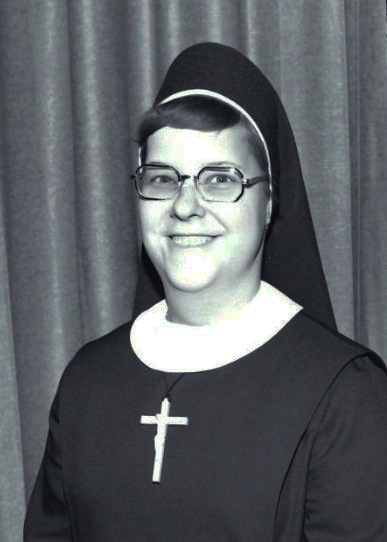
Sister Debra Marie, c. late 1970s, early 1980s
For Livonia, the closing of their aspirancy program is said to have occurred on June 6th, 1969. By this time, Felician Academy had transferred its aspirants to the north wing of the Livonia provincial house, which was first occupied by the Madonna College residents, in 1964. The aspirants were to attend Ladywood High School for the last years of the aspirancy program. There were fifteen girls in the final group of aspirants when the program was terminated there.
According to the Chicago province’s history, their last aspirant was Sister Debra Marie, Deborah Szczepanski. The program ended with her in 1973. She was likely the last aspirant in all of North America.
Post 1970s
In the wake of the aspirancy closing, the sisters changed their approach to recruiting young women to their order. From the 1970s onward, all religious orders, including the Felician sisters saw a steady decline in young women wanting to enter their order. In the 1980s, the sisters started their “Come and See” weekends, where potential vocations could spend time immersed in communal living for a short period of time. Pre-postulancy took the form of interested women becoming live-in affiliates for a time before deciding whether to fully commit themselves.
Nowadays, these steps take the form of Inquiry, which often includes a form of “Come and See” weekends. It is more clearly defined as when a woman discerns a call to religious life, which then leads to Candidacy, another step and which is still a pre-enterance time, where the woman joins the sisters in prayer and conversation while still living at home and still pursuing her professional life. This is the first step to sisterhood my boss, Sister Grace Marie Del Priore, mentions experiencing.
To learn more about the current steps in formation, please visit our Inquiry page and-
Stay tuned for the rest of the Formation series!