The Mystery
Where is Mother Mary DeSales Tocka buried?This was the central question I was tasked with answering after signing up for a genealogy class for my work. I am the assistant archivist for the Felician Sisters of North America. I help organize the Felician Sisters of North America Provincial Archives in Livonia, Michigan.
I thought taking this genealogy class would just involve me researching my own family history for practice. Nope! It turns out there are credible ways to use the skills gained from this class to help create more complete biographies of our sisters in the archives.
I didn’t fully realize this until the archives director, Sister Grace Marie Del Priore, asked me to look into the history of Mother Mary DeSales Tocka. When each sister joins the Felician Sisters' order, she not only becomes part of the order but also joins a family — a community of peers all dedicated to serving God and His people. The Felician Sisters of North America Provincial Archives is a family archives. So, naturally, genealogy can and should be used to study its members.
Just as researchers contact our archives for help with their genealogy research, we can use these same techniques to explore more of our sisters’ histories.
My Subject
Why start with Mother Mary DeSales Tocka? Why was she to be the subject of my research?Good question!
Mother Mary DeSales was the seventh provincial superior of the Blessed Virgin Mary Province in 1926, when the province was located in Detroit, Michigan. It would relocate to Livonia, Michigan, in 1932, when the sisters built a new motherhouse there, further out from the big city. At the same time, Mother Mary DeSales came into her second term as provincial superior, which ended in 1938.
From this time period to a decade later, when Mother Mary DeSales died, the story becomes muddled, and I am more reliant on oral history.
The story goes that Mother DeSales was sent to Grandview, Manitoba, Canada, in late 1941 to serve as the administrator of a small hospital in very poor condition. Having just completed her term as provincial superior, Mother DeSales was missioned to Grandview by Mother Mary Tarcilia Gaffke, the new provincial superior, to undertake this project at the behest of Most Re. Alfred Sinnott, the Archbishop of Winnipeg. In her Christmas circular letter to the sisters, Mother Tarcilia was clear to them about the state of the hospital, noting that there were no conveniences and that many difficulties would await them.
Mother DeSales would never get to experience the motherhouse she built in Livonia, Michigan. It was assumed that she died and was buried in Canada by the end of the 1940s.
However, all sisters who have died within the religious order, whether in the United States or Canada, should have a “deceased” file. Mother Mary DeSales’ deceased file could not be located in the archives, so I was told. It is unacceptable for any sister to not have such a file. Especially the sister responsible for building such a notable motherhouse on a campus with many valued ministries that still stand today.
It was time for me to get to work!
A Starting Place
So I hit the books! The Felician Sisters have always chronicled the history of their former provinces. In fact, they were specifically instructed to write about their lives and work by the Foundress, Blessed Mary Angela Truszkowska. History books were written for each of the eight Felician provinces that span North America. They give in-depth details from the province's beginning until around the 1970s. New books are being published now to complete those histories up to 2009, when all the provinces combined into one.
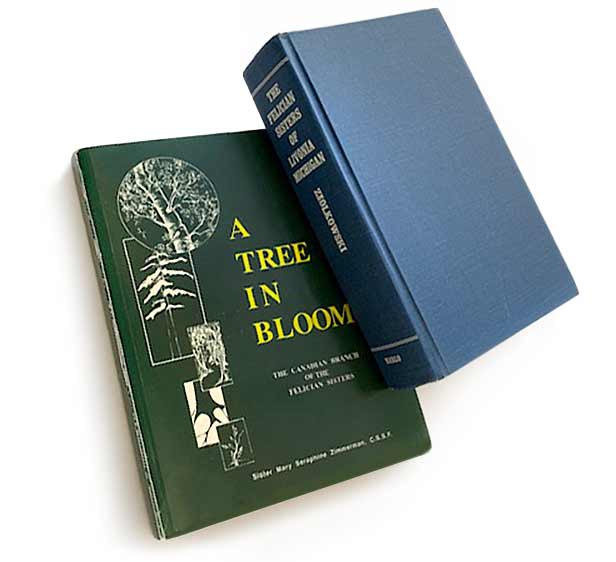
The Books: Felician Sisters of Livonia, Michigan, the history of the Presentation of the Blessed Virgin Mary Province in Livonia, Michigan, and A Tree in Bloom, the history of Holy Name of Mary Province in Mississauga, Ontario.
I started with the Presentation of the Blessed Virgin Mary Province history book, The Felician Sisters of Livonia, Michigan: First Province in America, since Mother Mary DeSales' journey is chronicled there. From this compiled history, I learned that she was the director of the aspirants from 1910 to 1913. In 1910, she and the aspirants were in Detroit, Michigan. From 1911 to 1913, they were at the “Thompson mansion” in Jackson, Michigan, when it became an orphanage for boys. Then, presumably, she was back in Detroit for some time, as the Thompson mansion lacked both funds and the ability to hold daily Mass on its grounds. And it was deemed too ‘elegant’ for the aspirants. These young women "aspiring to become sisters” required a humble environment, according to Mother Mary Bonaventure Stawska, who had served as the mistress of novices for fifteen years.
The next mention of Mother Mary DeSales is in 1920, at the temporary convent that had just been purchased in McKeesport, Pennsylvania, where she had come to help clean and prepare it.
Then, by 1926, she was back in Detroit, Michigan, to become provincial superior of Presentation of the Blessed Virgin Mary Province. There she purchased three tracts of farmland over time and, by 1935, began overseeing the construction of the Villa St. Felix, the new motherhouse. It was finished in 1936, allowing Sisters to move in.
Then in 1938, the mission in Manitoba was initiated with Mother Mary DeSales’ assistance. This is where things get messy.
Tracking Down Leads
I learned from the Livonia history book that Mother Mary DeSales was definitely in Canada by 1941. The sisters were said to have come to Grandview, Manitoba, Canada, in 1942, on New Year’s Day. Mother Mary DeSales was assigned to be the administrator of the Hospital of the Divine Child in Grandview. She remained in Grandview until the end of 1946, at which time she came back to the U.S. after experiencing a lung ailment that year and then a heart attack. She had to be hospitalized twice during that time.From here, my findings grew scarce as the Livonia history book trails off. I hoped to learn more from the Holy Name of Mary Province’s history book, A Tree in Bloom: The Canadian Branch of the Felician Sisters, but Mother DeSales is barely mentioned in the background story of the start of that province.
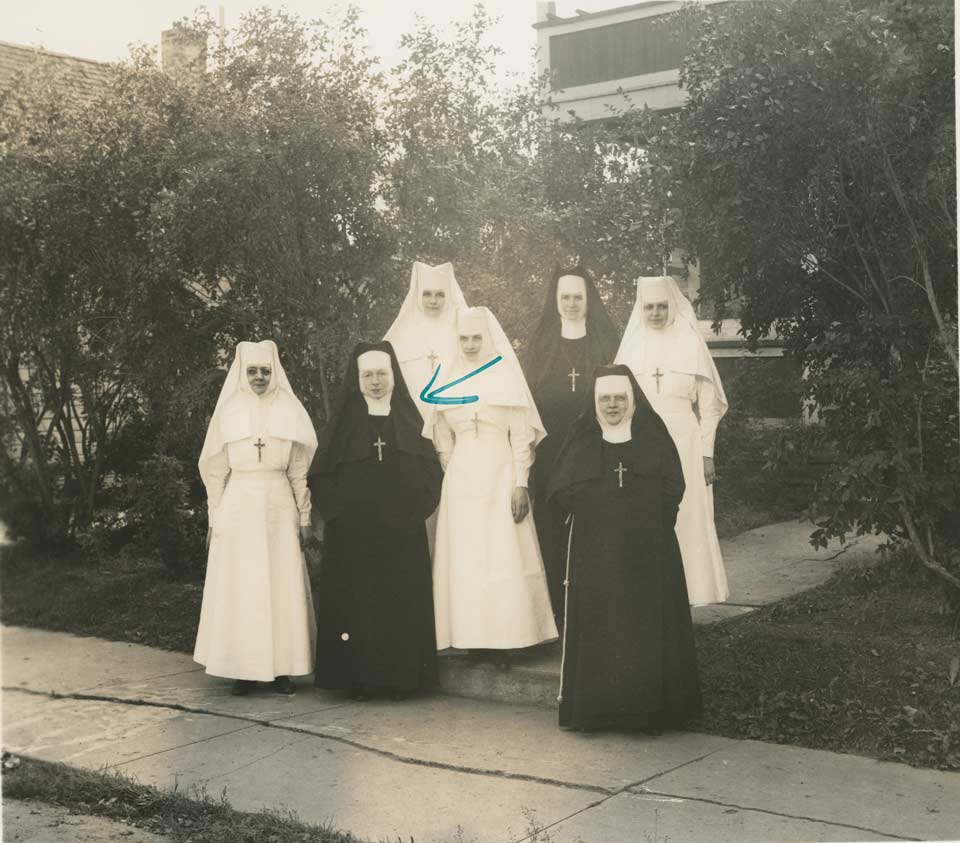
Felician Sisters staffing Divine Child Hospital in Grandview, Manitoba – 1944-45, Sister Mary Auxilia, Mother Mary DeSales, Sister Mary Symforose (Maria Rose), Sister Mother Walburga, Sister Mary Consortia, Sister Mary Thephila, Sister Mary Heraclia (Maureen), from Felician Sisters of North America Provincial Archives' Presentation of the Blessed Virgin Mary Province Divine Child Hospital in Grandview Records, Box 16, 601.001
Solved?
On a whim, I did what most people in their twenties do, I googled ‘Mother Mary DeSales Tocka’.Only one hit of relevance appeared, but it was a good one. Thanks, Findagrave.com! (Not sponsored.)
I found her grave! It was staring me in the face the whole time! She was born on June 7, 1872, in Poland. She died June 14, 1948, at age 76 in what is now Livonia (formerly Plymouth), Wayne County, Michigan, USA. She is buried at the Holy Sepulchre Catholic Cemetery in Southfield, Oakland County, Michigan.
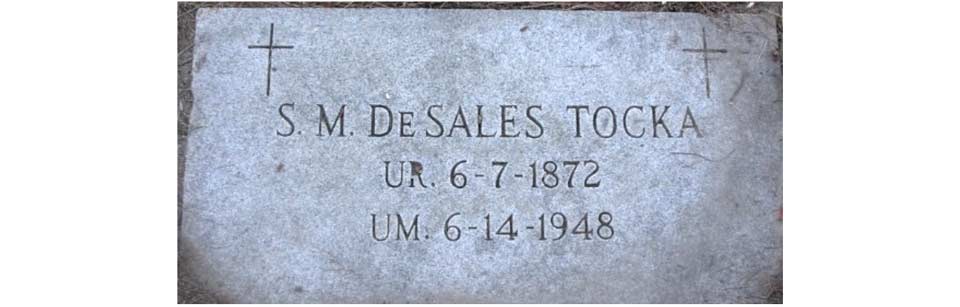
Tombstone for “S. M. DeSales Tocka, UR. 6-7-1872, UM. 6-14-1948,” sourced from Findagrave.com.
To recap, the sisters thought Mother Mary DeSales Tocka died in Canada and was likely buried in Canada, so they never looked for her records in the Livonia province! Or, if they did search for her in Livonia, without having her “deceased date,” it would have been much harder for them to find her.
In doing her research to write the Livonia history book, it is now clear to me that Sister Janice Ziolkowski must have used Mother Mary DeSales's “leadership file” to find information, not her “deceased file.” As Sister Janice has also passed away, I cannot ask her for more details on her research process, nor can I ask about the decision not to include Mother Mary DeSales’ death and burial location. The answer could simply be that the history book is not focused on this type of detail or on any one sister. And Mother Mary DeSales active participation in the story of the province, as it were, ended in 1946 due to sickness.
Deceased File
What’s the value of Mother Mary DeSales Tocka’s deceased file?Well, most genealogists would probably agree - absolutely priceless! (Or whatever tens of hours of research are worth to you).
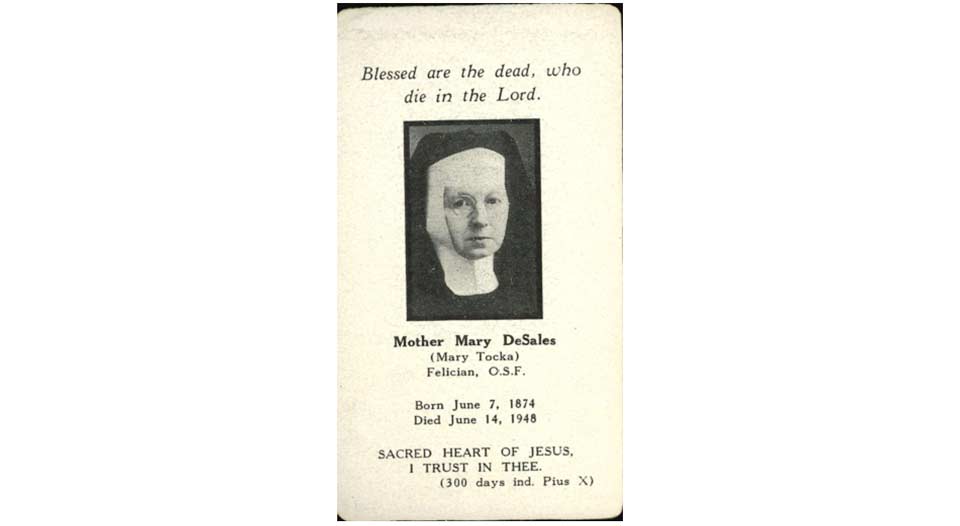
Funeral card of Mother DeSales (c. June, 1948) from the Felician Sisters of North America Provincial Archives' Presentation of the Blessed Virgin Mary Province Deceased Record, Box 3, 410.235.
Knowing where Mother Mary DeSales was buried, alongside her deceased date, I was quickly able to find a priceless treasure in the archives' Livonia records.Mother DeSales’ deceased file corroborates her birth and death dates on her tombstone. It also tells me her birth name and the names of her parents and siblings. Of particular interest to the Felician Sisters is the fact that Mother DeSales had a sister who also joined the order, Sister Mary Salerja (Saleria).
I now also have Mother DeSales birth location, Rekowo, Poland, which is essential for tracing her family lineage.
These records provide the cause of her death, too. It was pulmonary tuberculosis, which she was diagnosed with in 1946. This date coincides with when she left for the States and, according to her file, she permanently entered the Livonia motherhouse’s infirmary.
Other documents in her file listed where she worked while in the order, her citizenship papers (received on September 14, 1931), and her home parish (St. Josaphat in Detroit, Michigan).
This treasure trove provides me with multiple leads on where to find even more information on her and her family.
- Ship Logs - She was brought to America as an immigrant by her immigrant parents as a baby, her family wanting to pursue the ‘American Dream’. I know which months to investigate in the ship logs (August 1874 to January 1875) to find records of her and her family's passage.
- Citizenship Papers - She is a naturalized citizen, but the archives doesn’t have her final, physical paperwork on it. Digitally, though, they were found by a fellow genealogist who took the course with me and wanted to lend a hand.
- Baptismal, Confirmation, Census Records - Knowing her home parish in Detroit gives me a lead on a plethora of information regarding her family.
- Birth Certificate and Further Genealogy - The name of the town she was born in gives a lead on her family’s history in Poland that, while harder to pursue, is there nonetheless.
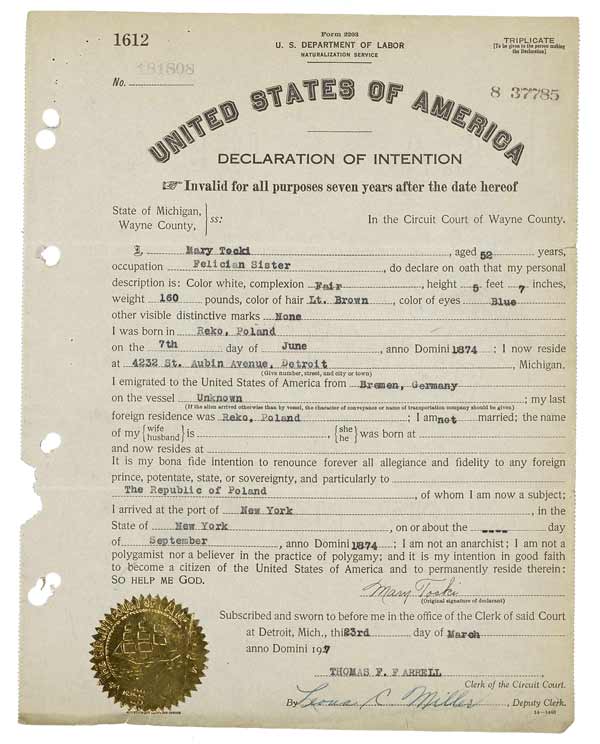
Declaration of Intention for Mother Mary DeSales into the United States, dated March 23rd, 1927, one of several papers found proving Tocka’s path from immigrant to citizen. "Wayne, Michigan, United States records," images, FamilySearch (https://www.familysearch.org/ark:/61903/3:1:3Q9M-CSWP-Q9N4-2?view=index : Oct 6, 2025), image 988 of 1036; United States. National Archives and Records Administration. Great Lakes Region. Image Group Number: 102115219 https://www.familysearch.org/ark:/61903/3:1:3Q9M-CSWP-Q9N4-2
Lingering Questions
While I "solved" some of what I set out to solve, something wasn't right. I may never understand why certain details in Mother DeSale's life and death were left out of the Livonia province history book, but why was Mother DeSales' not included in the Canadian province's history?
Okay, Mother Mary DeSales’ deceased file was in the Livonia archival collection. Sister Mary Seraphine Zimmerman was writing the Canadian history book based on records found in the Canadian province’s archival collection. Naturally, there might be less information on Mother Mary DeSales for that reason, and like Sister Janice, Sister Mary Seraphine is also no longer alive for me to pose these queries to.
It makes sense to me that she doesn’t appear in the Canadian history as a central figure, but considering her huge role in two hospitals in Canada, especially Divine Child in Grandview, why is she absent?
The answer to this pondering came while I was walking down the aisle of the Livonia province’s ministry records, when the word “Grandview” jumped out at me. Unbelievably, here were the Grandview Hospital records that I had previously been unable to locate, and they were not included in the Canadian collection!
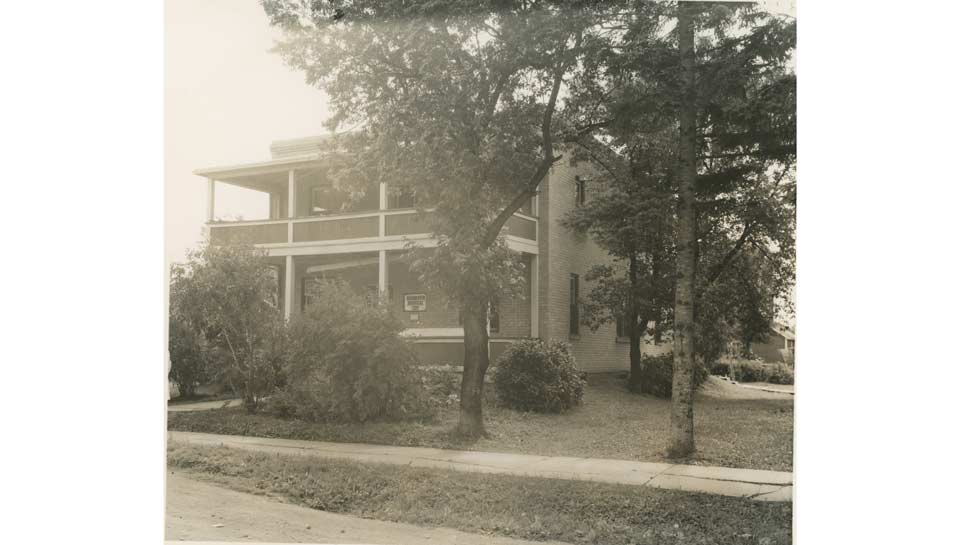
Outside shot of “Grandview Hospital of the Divine Child – Grandview, Manitoba 1941-1947” from Felician Sisters of North America Provincial Archives' Presentation of the Blessed Virgin Mary Province’s Divine Child Hospital in Grandview Records, Box 16, 601.001.
The Answers...
The only way to figure this out was to read more. So back to the books I went.What I learned was that this mission in Canada – the administration and staffing of a hospital in Manitoba, and building another hospital in Langenberg, Saskatchewan – was not at all a part of the history of the Felician Sisters' Canadian province, Holy Name of Mary.
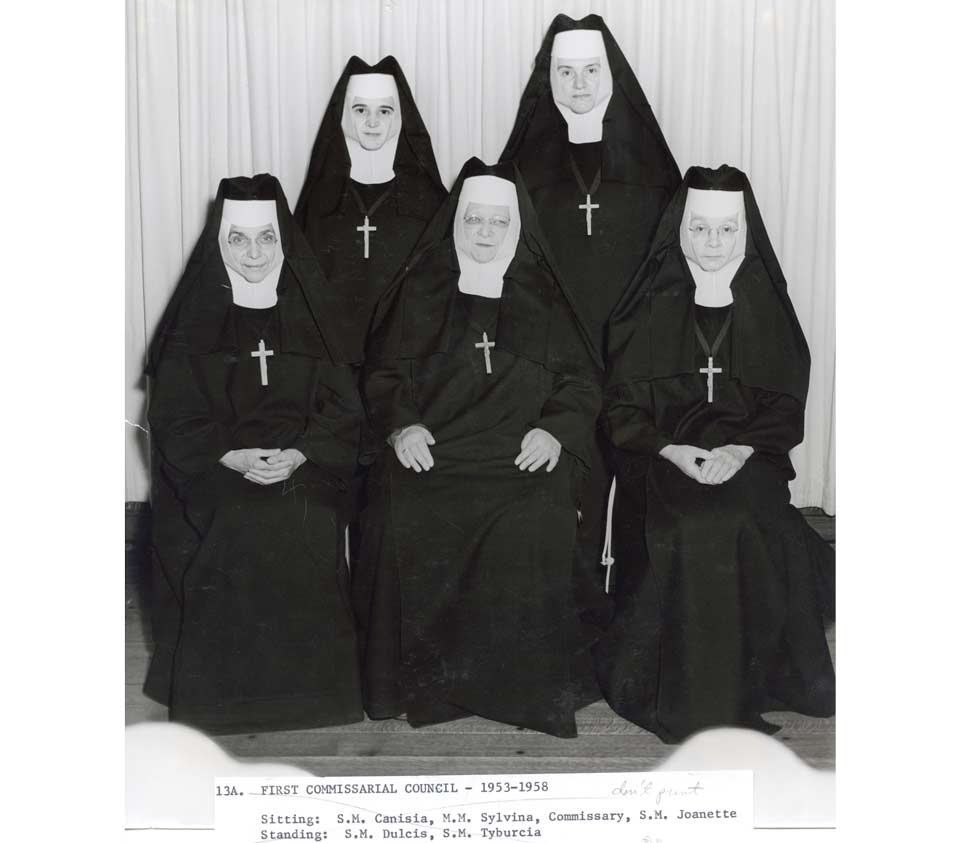
I discovered that the Canadian province was firmly established in 1953, with its own Commissarial Council under the jurisdiction of Immaculate Heart of Mary Province in Buffalo, New York. So, the Hospital of Divine Child in Grandview, which was started in the 1940s, was a ministry that belonged to the Presentation of the Blessed Virgin Mary Province in Livonia. Michigan. So two different Canadian missions were initiated by separate provinces, and that matters here.
While I can’t ask Sister Mary Seraphine Zimmerman why there wasn’t more foregrounding on Mother Mary DeSales and her hospital ministry in her history book, I now understand it has less to do with geographical boundaries and more with provincial ones. The story of this Canadian Mission belonged to the Livonia province, and Sister Janice told it.
1st Commissarial Council: 1953 - 1958
This endeavor all started with me taking a genealogy class, and while I feel like I didn’t get very far with the resources the course introduced me to, my archives seems to have provided the biggest wealth of knowledge for my purposes. I garnered more than I thought I would from resources provided by my own place of work, reading our own histories.
- I found Mother Mary DeSales Tocka’s deceased file
- I located the Divine Child Hospital in Grandview, Canada, records
- I learned how and why previously written provincial history books were written the way they were
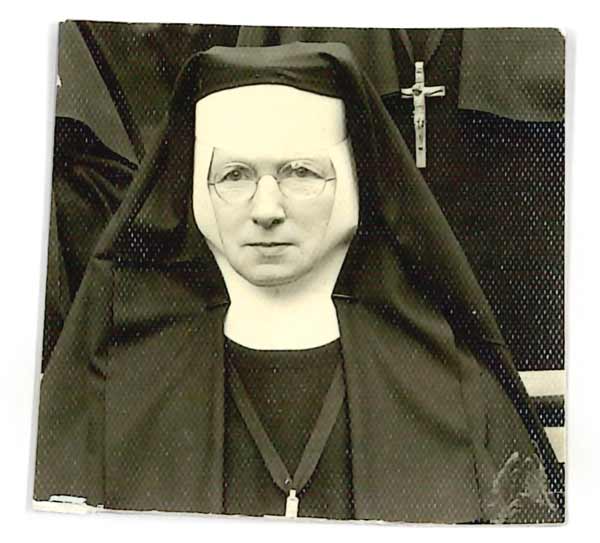
Mother Mary DeSales Tocka's photo that is attached to her permanent record from the Felician Sisters of North America Provincial Archives' Presentation of the Blessed Virgin Mary Province Deceased Records, Box 3, 410.235.
Genealogical Starting Point
In the end, the genealogy class that started this whole quest pushed me to learn how to trace a sister’s history within my work’s own archives, parsing through oral history, written history, and primary sources. It also led me to learning more about the Felician Sisters’ Canadian missions, which I had not had the opportunity to look into before. The Felician Sisters of North America Provincial Archives is technically made up of nine smaller archives, or large collections, each one representing the former provinces and the one current province they all now fall under.Learning about one large collection is a considerable amount of work, but learning about nine and their respective histories and how they interacted is a lot to know. I am still learning, and this foray into genealogy has really displayed that. My research journey technically spans at least two to three former provinces and their records – Livonia, Canada, and Buffalo.
This class and my research has highlighted where I need to grow in my knowledge of the Felician Sisters’ history as well as the starting points for genealogical research outside of the comforts of the sisters’ records in the form of ship logs or church documents.
The Felician Sisters of North America Provincial Archives is a fantastic launching pad for genealogical history, particularly if your family member was a Felician Sister. Maybe you only have a birth name or date of birth. Our archives probably has some answers for you. All you have to do is ask, just as I was asked, “Where is Mother Mary DeSales Tocka buried?”