On view through Nov 21, 2027
Beatification!
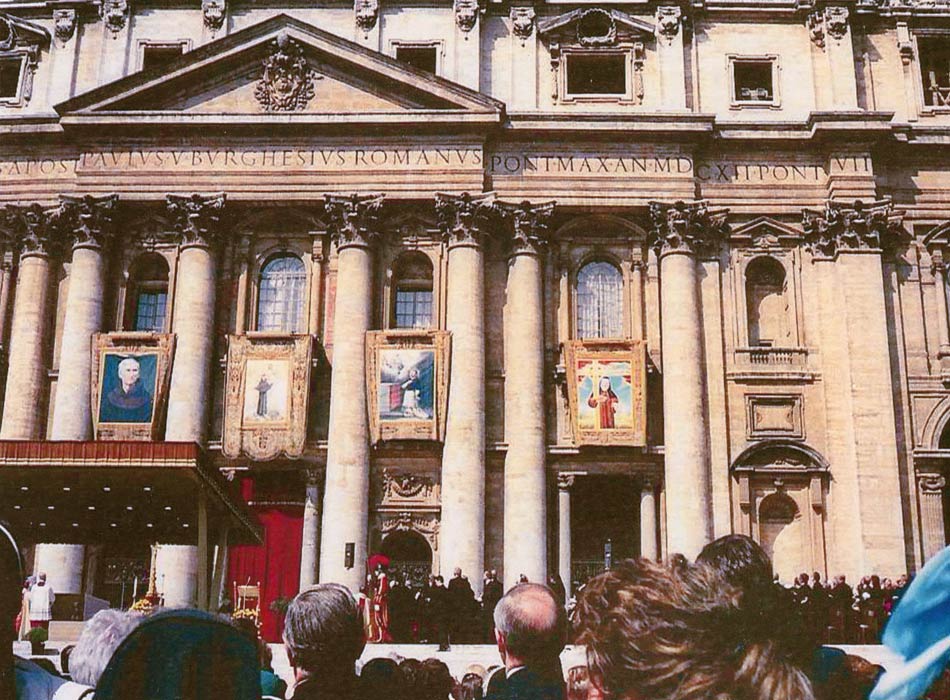
On April 18, 1993, in Rome, Italy, Felician Foundress Mother Mary Angela was beatified, receiving the title "Blessed." The process of sainthood is long and involves investigations and research.
Saint Peter's Basilica on the day Mother Angela Truszkowska was one of four beatified. Her banner, created by Sister Mary Colette Michniewicz, hangs to the right.
Steps to Sainthood
In official Church procedures, there are three steps to sainthood. The pope declares a candidate Venerable if they lived a heroically virtuous life or were martyred. Beatification requires that, additionally, a miracle was acquired through the candidate's intercession. Canonization requires a second miracle to occur after beatification.
Medical miracles must be:
- instantaneous
- medically unexplainable
- and the condition cannot recur.
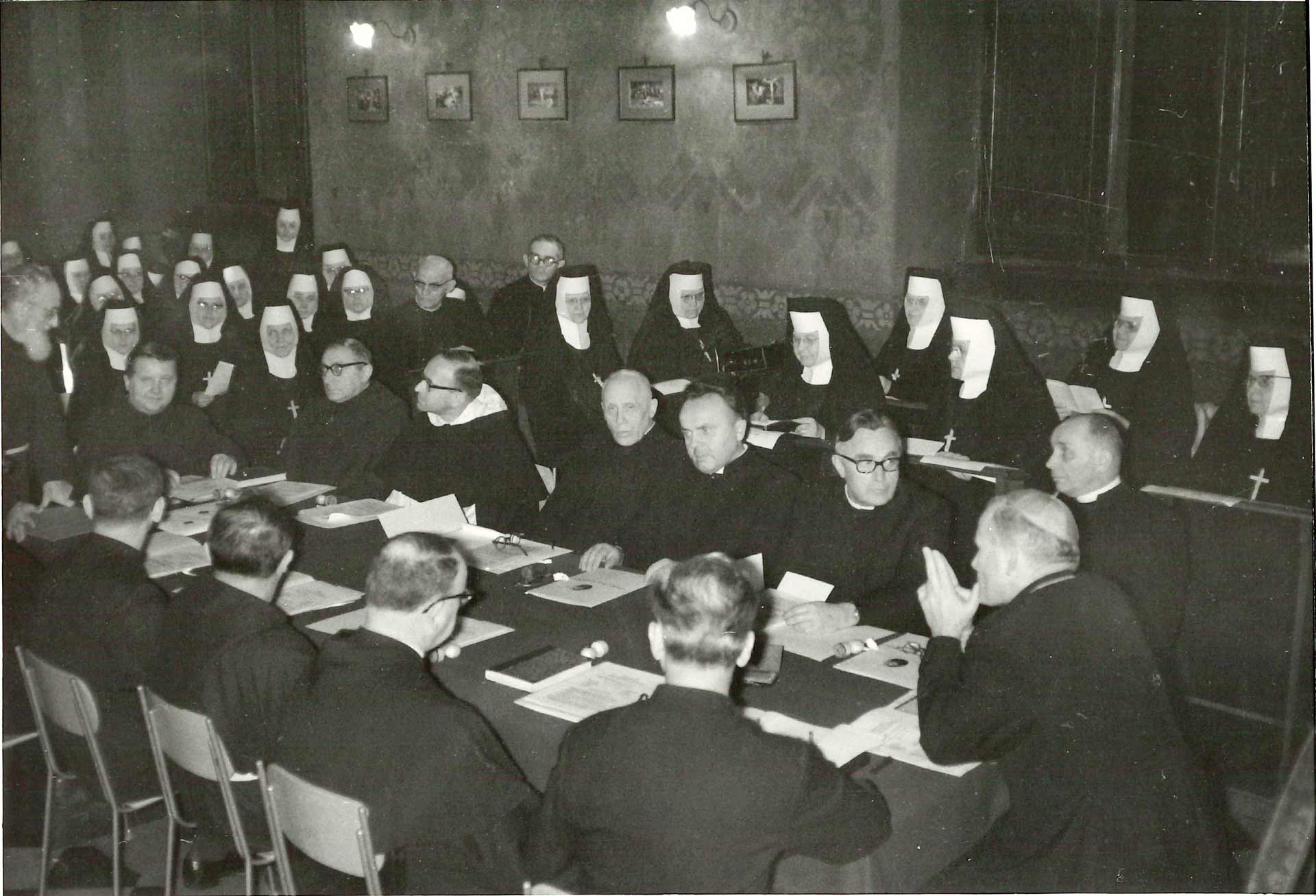
Seated at the right side head of the table is then Cardinal Karol Wojtyla (Saint Pope John Paul II), Archbishop of Krakow, who closed the informative process of the Cause for Beatification in 1969, ensuring it was submitted to the Holy See for further investigation.
Step 1. The Veneration of Mother Angela Truszkowska
In 1949, Mother Mary Simplicita Nehring initiated the process towards canonization of the Felician Foundress with Adam Cardinal Sapieha, then Archbishop of Krakow. Mother Angela's writings were studied, and interviews were performed. After a 33-year investigation, Mother Mary Angela was named a venerable servant of God in 1982. Now, it would take a miracle to advance to sainthood.
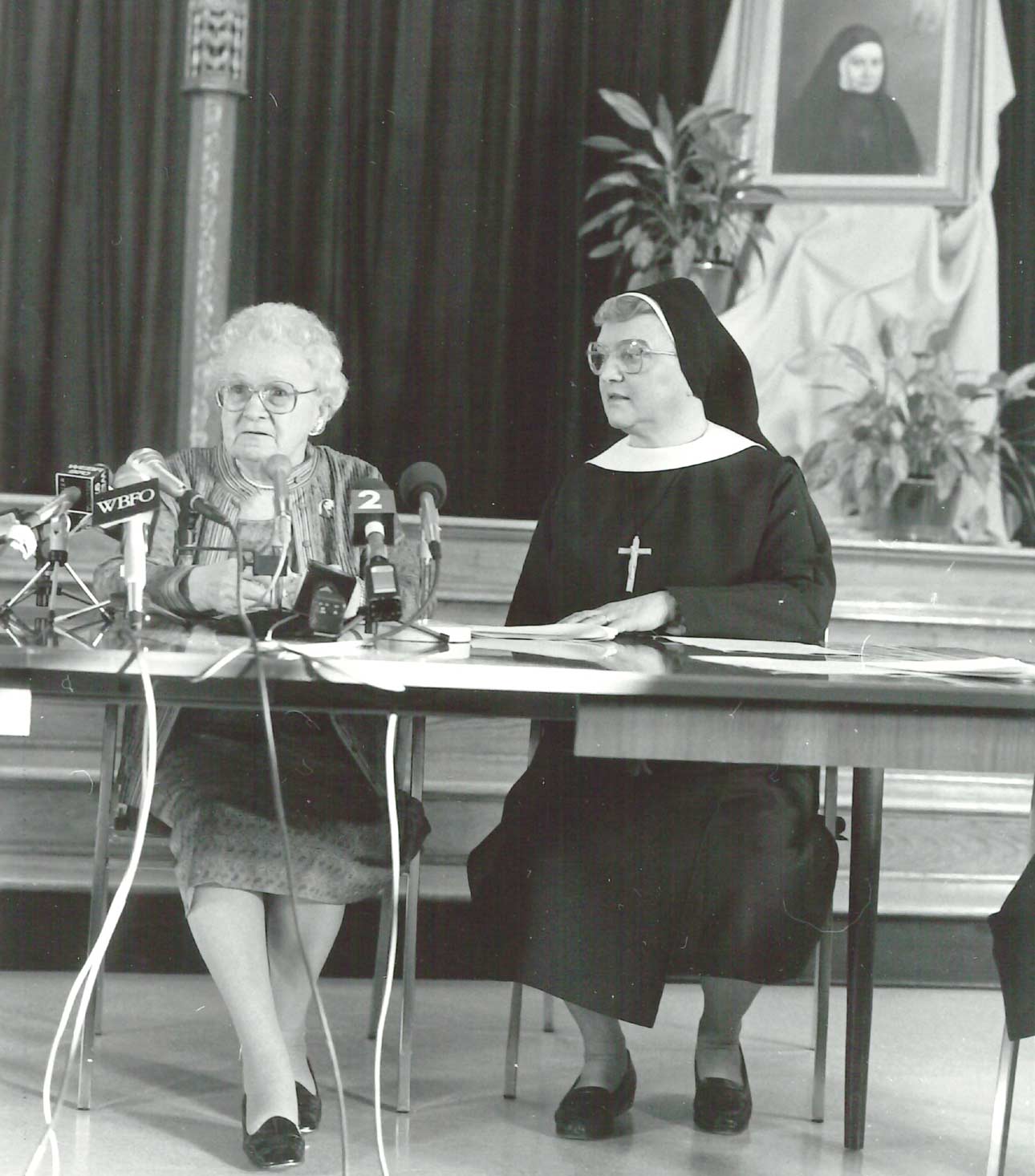
On January 25, 1993, Sister Mary Mark Janik and Lillian Halasinski spoke at a press conference in Buffalo, New York.
The Miracle!
In 1983, while visiting sick parishioners at St. Hedwig Parish in Dunkirk, NY, Sr. Mary Leocretia Laskowski encouraged 71-year-old Lillian Halasinski to pray to Mother Angela to alleviate her debilitating pain from diabetic neuropathy. Diabetic neuropathy is a disease that cannot be reversed or cured.
Suffering for eight years, the disease had gotten much worse, and Lillian was hospitalized. Declining at home, she could only walk with assistance. Her legs swollen, she had lost 65 pounds and begged for amputation.
On January 4, feeling near death, Lillian sobbed all day in severe pain, repeating over and over, “Blessed Angela, heal my leg.”
At 9 p.m., Lillian experienced a strange, gentle peace in her heart. She felt a presence. Mother Angela came through the house, she said.
I could sense her presence right through the kitchen door. I could smell her beautiful flowers and suddenly felt no pain.
Lillian looked at her leg. The swelling was gone. The scaly, peeling skin was pink and healthy, and she was pain-free. She moved her leg, stood up, and began to walk.
Two days later, on January 6, Sr. Leocretia brought Holy Communion to Lillian's house, expecting a dying woman. She was met at the door by a radiant, smiling Lillian.
Sr. Leocretia notified Sister Mary Antonelle, the coordinator for the cause for Mother Mary Angela, to tell her she believed a miracle had occurred through the intercession of Mother Angela.
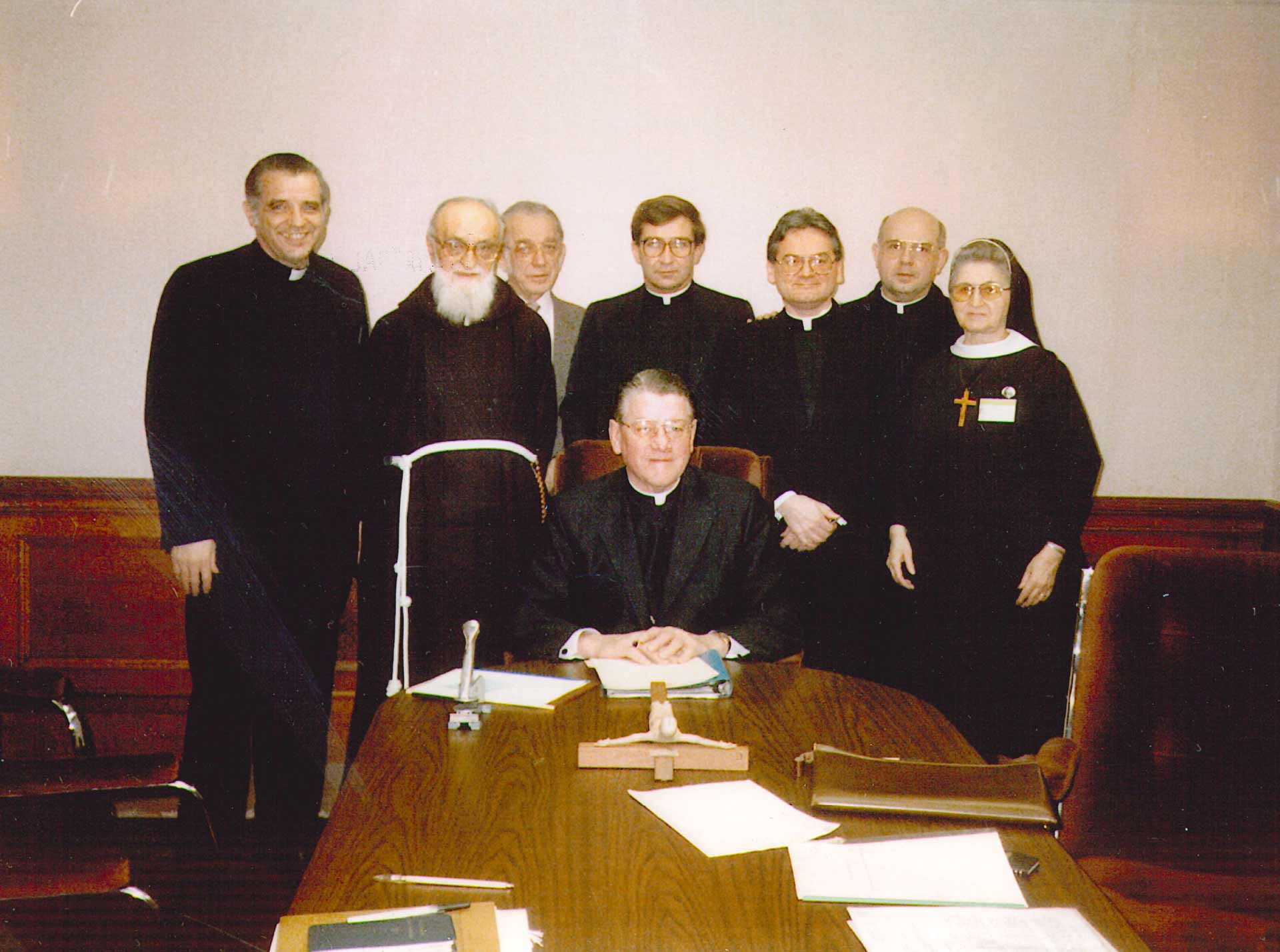
The Diocesan Tribunal for the Investigative Process of the miracle, photographed on February 10, 1986. Standing: Msgr. Angelo Caligiuri, Padre Bernardino Romagnoli, Dr.Casimir Pietraszek, Msgr. Peter Popadick, Rev. David Slubecky, Rev. Robert Golombek, and Sister Mary Antonelle Dziechciarz, vice-postulator (not a member of the Tribunal). Seated was Most Rev. Edward D. Head, Bishop of Buffalo.
Investigation Into the Cure
The cure was reported to Rome and a local commission formed. Fifteen witnesses, including five doctors, testified over ten meetings. Medical experts in Rome studied further, and on July 11, 1992, nine years after the miracle, Pope (Saint) John Paul II approved the decree that God, through the intercession of Mother Mary Angela, had cured Lillian Halasinski.
A second miracle attributed to Blessed Angela is required for her canonization.