A Novice - Defined
A woman becoming a novice means undergoing a time of intense study of the sisters' way of life, which involved the study of religious life in adherence to Francis' rule and its spirit, as well as the vows, charism, ministries, and Constitutions of the Congregation. This is also a time of prayer and further development of the sisters’ relationship with God.

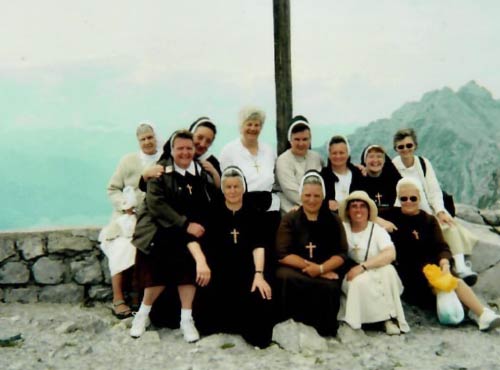
Novices and older sisters mingling from the Lodi, NJ, Immaculate Conception Province's motherhouse, c. 1970s.
In the past, this was a step of sisterhood that typically took one year and was, under Canon Law, supposed to be a time when novices were “kept strictly separated from the other members of the community so that the novice director could shape them in the spirit of the order, unencumbered by outside influence,” according to former sister historian Charlene Endecavage. However, through the sisters' beginnings in America to the 1920s, the ‘separation’ part of this step was often not adhered to. This is because of the high demand for the sisters in North America, as was discussed more thoroughly in our blog post on the aspirancy. As a result, the novices of the time were already well enmeshed in the order, in various ministries, in a way Canon Law did not, and could not, account for at the time. In the present, this step is intended to be less separate and withdrawn, and take about two years to complete. Today, this phase also has come to include the relaxing of a more formal looking habit, complete with a distinctive white veil, upon entrance to this step, to a more modern habit that may or may not include a veil–depending on the new novices’ choice.
Novitiate: Young Sisters Abound

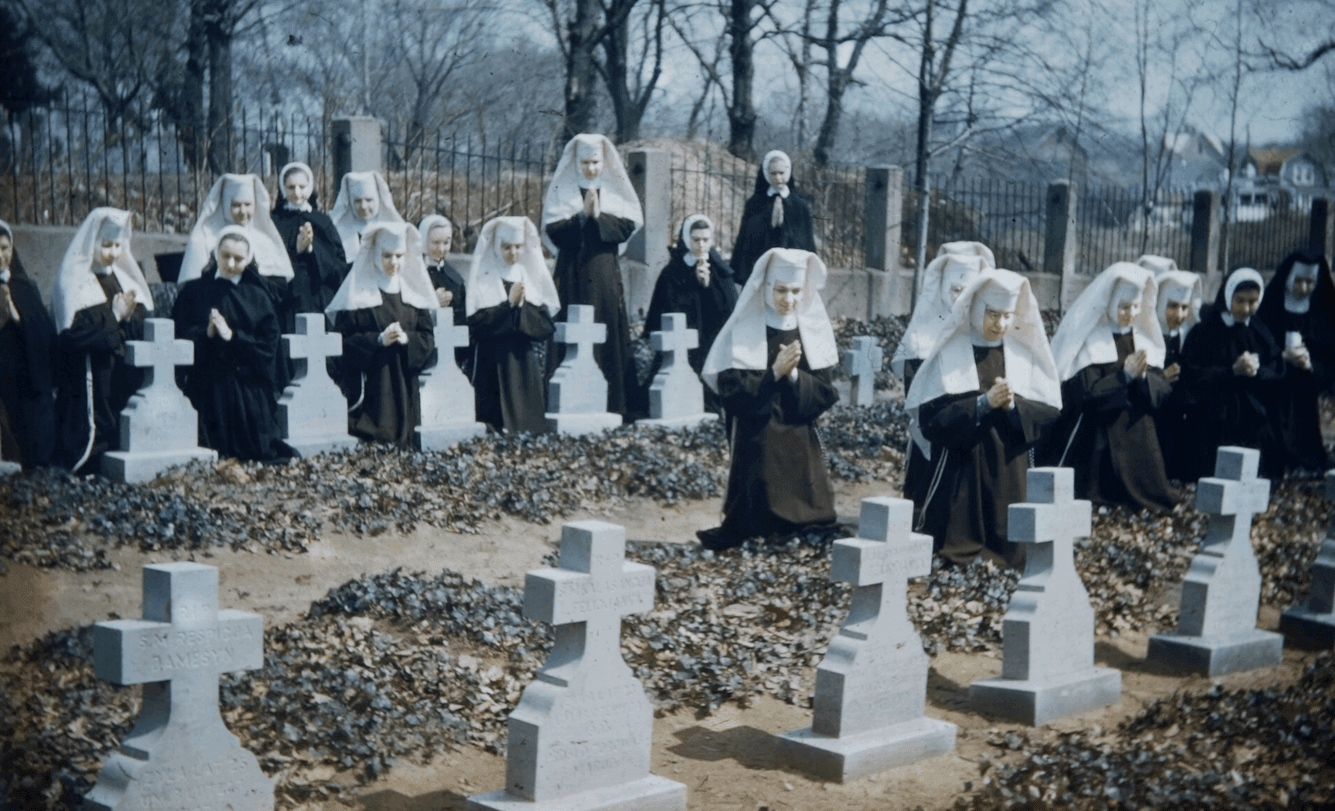
First novitiate pictured after the installation ceremonies in the Assumption Convent, 1953.
It should be noted that the step of the novice is also, more formally, known as the novitiate. However, this term is often used to more generally denote younger sisters, generally postulants and novices, but not always.
As a result of the Novitiate often referring to younger sisters of the congregation more generally, the separate housing for said younger sisters, when created, were referred to as the house for the novitiate, which was not always fully separate from the main motherhouse of the province, but always was on the same property as it. Oftentimes, such was the case for the Assumption of the Blessed Virgin Mary (ABVM) Province’s novitiate in 1953, this means a second floor of the motherhouse or, in the case of the program in 1961, a separate wing of the house, which was named Alverno Hall for the ABVM Province.
This close proximity allowed the young novices to perform duties on behalf of the older sisters. One such duty was for the novices to signal the time of ‘rising’ for the rest of the motherhouse with a form of wooden clapper. This usually took place at 5:00 a.m., according to the order’s 1921 Constitutions. The practice seemed to have continued, in some form, into the 1950s before phasing out.

One of two types of wooden clappers used to wake sisters, c.1900s from the Lodi province.

A novice from the Lodi province checks the clock in her hand before using the wooden clapper to wake the older sisters, c. 1950s-60s.
Establishing a Province
Every province must have a novitiate–a strong group of postulants and novices to house–in order to become a province. By far, the hardest novitiate for the Felician Sisters of North America to establish out of their eight was in Canada, the Holy Name of Mary Province. This was largely due to the fact that there was a long permission process from those within the church and that this was the first and only province in North America established outside of the United States. Despite the sisters having been in Canada, assisting the Polish and other, primarily European, immigrants there since the 1930s, their novitiate did not gain approval until 1951. The sisters working in Canada had been sending their candidates for their novitiate to the Buffalo Province since 1942 before the approval. In the time of World War II, it started to become harder and harder to gain permission from US immigration offices for candidates to the novitiate to cross the border. However, the influx of interested girls that were coming to Canada as war refugees from Europe and South America could not be ignored. Thus, the sisters in Canada moved forward with advocating for a novitiate to be established.

The First Novices in the Canadian Novitiate.
Director of Novices
To head the programming and general guidance of the novices, a Mistress of Novices or, as it later became more formally known, Director of Novices is usually appointed. In the early days of the province, with the first five pioneer sisters, this responsibility, along with many of the other leadership positions of a province’s governance, was left to Mother Monica Sybilska. She remained in charge of the novices from the sisters’ arrival in America to 1885, when Sister Mary Humilianna Glazer took over the position.
Into the 1960s, according to the history book marking the start of the Assumption of the Virgin Mary Province, Felician Sisters in the West, their Mistress of Novices oversaw both the novices and postulants. Most provinces had a separate Director of Postulants as the Felician Sisters have today, but the province of the Assumption of the Virgin Mary had always been one of the order’s smallest in North America. It is likely that the province was too small to justify a splitting of the responsibilities into two positions.

The earliest picture of novices from the first province in America, Blessed Virgin Mary Province, headed by the appointed Mistress of Novices, Mother Mary Bonaventure Stawska (third row, five in the from the left), 1903.
In further examining the title of Director of Novices, there is one other peculiarity to explore. That puzzlement is why, in the archives’ finding aids and in many of the orders’ various history books, only the Director of Novices is listed amongst the positions of leadership for the eight provinces and not the Director of Postulants or even the Director of Aspirants or Candidates. These are positions that exist in some form today, but they have never been included in the group pictures of leadership personnel. The answer to this conundrum came in the form of the current Coordinator of Formation for the sisters in North America, Sister Suzanne Marie Kush. As a sister who has thoroughly studied the order’s constitutions, she clarified that the other positions mentioned always existed in some form, but the Director of Novices is a special position. It is a position that is appointed, not voted upon like many of the other positions of leadership, by the sister in the position of Minister General. It is also an automatic delegate of the Provincial Chapter. This is because the sisters take the education and guidance of their novices very seriously. The sister that is appointed to the position of Director of Novices must be personable and spiritual enough to connect with the younger sisters and assist them in further spiritual growth. This is the stage of becoming a sister where things get more serious in preparation for the novices’ temporary vows.
Other Novitiate Programs?
It may surprise lay people, but there are named second and third novitiate programs that take place later in a religious sisters’ life after this first main one. Confusingly for many outsiders of religious orders, these novitiates are also not chronologically next to one another, hence this preface. While these other novitiates are important, they are not the main ones on the path of becoming a full fledged sister within the Felician order. (Please see our post listing out the main steps here.) However, they will be touched on in this series as we continue on. Afterall, our very own Head Archivist, Sister Grace Marie Del Priore, is going through her third novitiate,which is largely referred to as Tertianship today, right now, and we wouldn’t want to miss out on a first hand account. So...
Stay tuned for the rest of the Formation series!